
Wie 30% weniger Arbeit 40% mehr Erfolg bringt. / How 30% less work leads to 40% more success. #B149
Volle Kalender, viele Meetings und ständige Erreichbarkeit sehen nach Leistung aus – sind es aber oft nicht. Produktivität entsteht durch Fokus, Weglassen und klare Prioritäten. Auch KI hilft nur dann, wenn sie Ergebnisse beschleunigt, statt uns noch effizienter zu verzetteln.



Wir leben in einer Zeit, in der volle Kalender, viele Meetings, ständige Erreichbarkeit und hektische Betriebsamkeit oft mit Leistung verwechselt werden. Genau hier beginnt das Problem. Denn Produktivität ist nicht die Menge dessen, was wir tun, sondern das Verhältnis von Input zu Output. Oder einfacher gesagt: Was kommt hinten raus im Verhältnis zu dem, was wir vorne an Zeit, Geld und Mühe investieren?
Diese Prozentspielerei in der Headline mag variabel sein. Manchmal sind es vielleicht (nur) 20 Prozent weniger Einsatz für 20 Prozent mehr Erfolg. Manchmal ist das Verhältnis aber deutlicher. Entscheidend ist nicht die Zahl, sondern die Richtung. Wer lernt, Unwichtiges wegzulassen, gewinnt Kraft für das, was zählt.
Gerade in komplexen, vernetzten und hektischen Arbeitswelten wird Fokus nicht unwichtiger, sondern wichtiger. Viele Menschen und Teams verzetteln sich, weil sie zu viel gleichzeitig anpacken. Zehn Aufgaben beginnen, fünf Ideen gleichzeitig verfolgen, dauernd auf neue Reize reagieren – und wundern sich, warum trotz großem Einsatz zu wenig Erfolg entsteht.
Hier kommt übrigens auch die KI ins Spiel. Richtig eingesetzt, ist sie ein massiver Produktivitätshebel: Sie übernimmt Routinen, strukturiert Gedanken und beschleunigt Ergebnisse. Falsch eingesetzt, verstärkt sie jedoch genau das Problem: noch mehr Ideen, noch mehr Input, noch mehr Parallelität. Dann wird KI nicht zur Lösung, sondern zur perfekten Verzettelungsmaschine.
Das ist kein Fleißproblem. Das ist ein Führungs-, Organisations- und Fokusproblem.
Wer Resultate will, muss lernen, vieles bewusst nicht zu tun. Nicht jede Idee verdient sofort Aufmerksamkeit. Nicht jede Unterbrechung ist wichtig. Nicht jede Aktivität ist ein Beitrag zum Erfolg. Zwei Aufgaben an einem Tag sauber und gründlich abzuschließen, ist in der Regel wirkungsvoller als zehn halbfertige Baustellen auf morgen zu verschieben. Halberledigte Arbeit kostet doppelt soviel Zeit: in der Organisation und im Kopf.
Die Lösung ist nicht mehr Druck. Die Lösung ist Klarheit. Und genau hier entscheidet sich auch, ob eine gute Organisation, klare Kommunikation und KI nützt. Führung heißt, Prioritäten zu setzen, Unterbrechungen zu reduzieren und neue Vorschläge – ob von Menschen oder von KI – konsequent mit Strategie und Ziel abzugleichen. Wer Fokus will, muss Rahmenbedingungen schaffen, in denen konzentriertes Arbeiten möglich ist.
UNSER FOKUS
- Wir fragen uns jeden Tag neu: Was ist heute wirklich wesentlich?
- Wir fördern Klarheit statt Dauerablenkung.
- Wir schützen Mitarbeiter vor unnötigen Unterbrechungen.
- Wir nutzen KI gezielt für klare Aufgaben – nicht als Dauerbeschallung für neue Ideen.
- Wir prüfen neue Impulse anhand unserer Strategie.
- Wir akzeptieren: Weglassen ist Professionalität.
UNSER NUTZEN
- Mehr Resultat statt mehr Aktivität.
- Höhere Produktivität durch Konzentration.
- KI als Verstärker von Qualität – nicht von Chaos.
- Mehr Motivation durch sichtbare Fortschritte.
- Klarere Teams und bessere Prozesse.
- Mehr Ruhe im Kopf und bessere Qualität in der Umsetzung.
Vielleicht ist genau das heute eine der wichtigsten Führungsfragen überhaupt: Was lassen wir bewusst weg, damit das Wesentliche wieder Kraft bekommt? Denn stark ist nicht der, der auf allen Hochzeiten tanzt. Stark ist der, der an den wenigen entscheidenden Stellen Wirkung erzeugt.
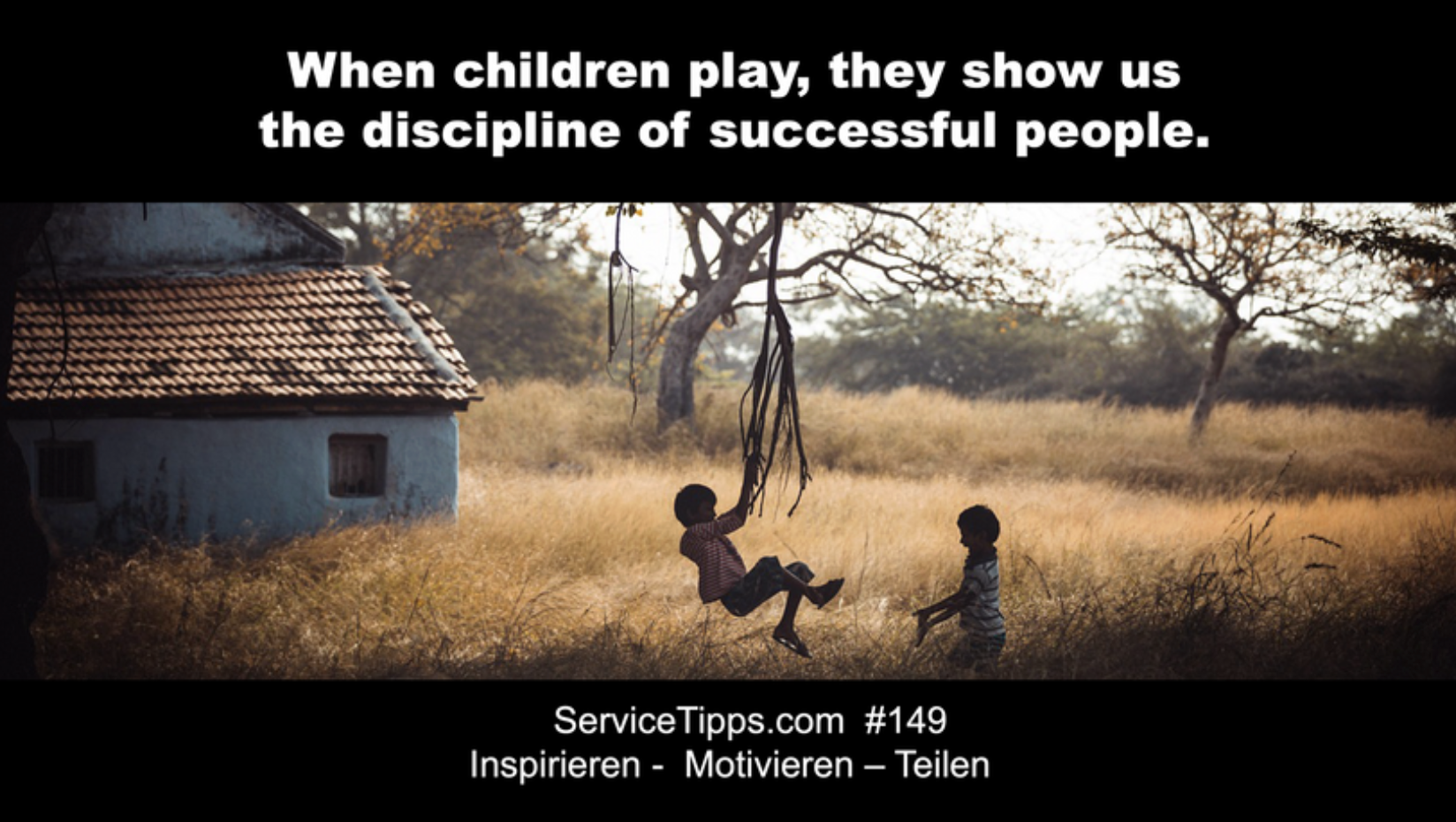
Und vielleicht lohnt sich genau hier ein einfacher Blick: Wenn Kinder spielen, wie man auf den Tipp-Bild sieht, zeigen sie uns die Disziplin der erfolgreichen Menschen. Sie sind ganz bei einer Sache. Ohne Ablenkung. Ohne Nebenbei. Genau darin liegt ihre Stärke – und genau darin liegt unsere Chance.
So long – Servus, ciao und allegra. Bleibt neugierig und mach dein Ding.


We live in a time where full calendars, countless meetings, constant availability, and hectic busyness are often mistaken for performance. That’s exactly where the problem begins. Because productivity is not about how much we do, but about the relationship between input and output. Or more simply: what comes out compared to what we invest in time, money, and effort?
This percentage game in headlines may vary. Sometimes it’s (only) 20 percent less effort for 20 percent more success. Sometimes the ratio is even more significant. What matters is not the number, but the direction. Those who learn to eliminate the unimportant gain strength for what truly matters.
Especially in complex, connected, and fast-paced work environments, focus does not become less important—it becomes more important. Many people and teams lose themselves because they try to do too many things at once. Starting ten tasks, pursuing five ideas simultaneously, constantly reacting to new stimuli—and then wondering why, despite great effort, too little success is achieved.
This is also where AI comes into play. Used correctly, it is a massive productivity lever: it takes over routines, structures thinking, and accelerates results. Used incorrectly, however, it amplifies the problem: more ideas, more input, more parallel activity. Then AI is no longer a solution, but the perfect machine for distraction.
This is not a diligence problem. It is a leadership, organizational, and focus problem.
Anyone who wants results must learn to consciously not do many things. Not every idea deserves immediate attention. Not every interruption is important. Not every activity contributes to success. Completing two tasks thoroughly in one day is usually far more effective than leaving ten half-finished jobs for tomorrow. Half-finished work costs double the time: in the organization and in the mind.
The solution is not more pressure. The solution is clarity. And this is exactly where it becomes clear whether good organization, clear communication, and AI are useful. Leadership means setting priorities, reducing interruptions, and consistently aligning new proposals—whether from people or from AI—with strategy and goals. Those who want focus must create conditions that enable concentrated work.
FOCUS
- We ask ourselves every day: what truly matters today?
- We promote clarity instead of constant distraction.
- We protect employees from unnecessary interruptions.
- We use AI selectively for clear tasks—not as a constant stream of new ideas.
- We evaluate new impulses based on our strategy.
- We accept that letting go is professionalism.
BENEFIT
- More results instead of more activity.
- Higher productivity through concentration.
- AI as a driver of quality—not chaos.
- More motivation through visible progress.
- Clearer teams and better processes.
- More mental clarity and higher quality in execution.
Perhaps this is one of the most important leadership questions today: What do we deliberately leave out so that what truly matters regains its strength? Because strength does not lie in dancing at every opportunity, but in creating impact at the few decisive points.
And perhaps it’s worth a simple observation: when children play—as you can see in the visual—they show us the discipline of successful people. They are fully focused on one thing. No distractions. No multitasking. That is their strength—and that is our opportunity.
So long – servus, ciao, and allegra. Stay curious and do your thing.
