
Warum Work-Life-Balance dich eher bremst als glücklich macht / Why work-life balance slows you down rather than makes you happy #B143
Work-Life-Balance klingt vernünftig, passt aber oft nicht zur Realität. Arbeit und Freizeit verlaufen in Phasen unterschiedlicher Intensität. Entscheidend ist die bewusste Steuerung von Leistung, Fokus und Erholung. Kurzum: Fokus schlägt Balance.

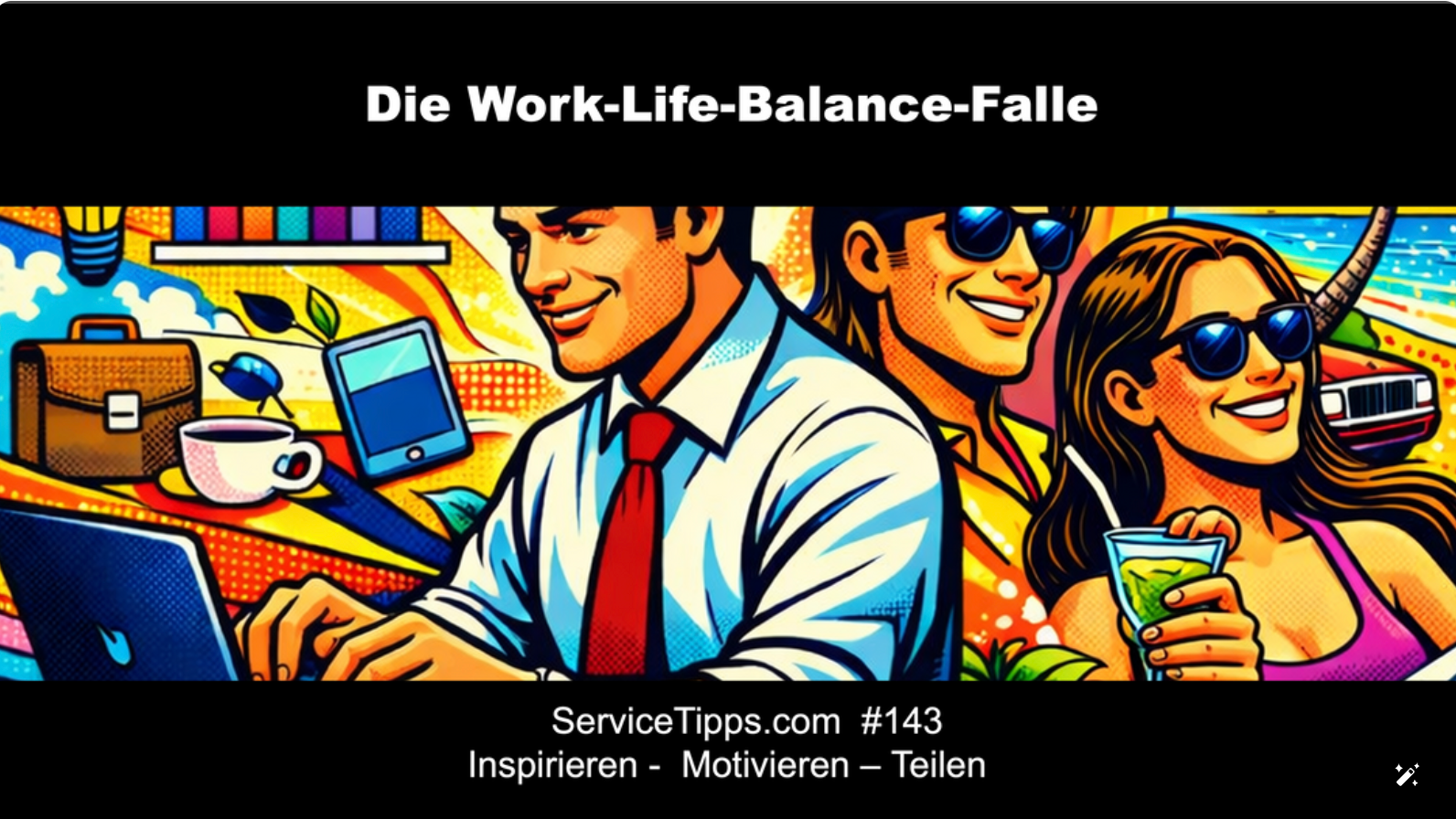
Work-Life-Balance gilt heute als Heilsversprechen für Zufriedenheit und Glück. Die Idee ist, dass man alles gleichmäßig ausbalanciert, dass man Arbeit und Leben sauber trennt und dass Stressmomente um alles in der Welt vermieden werden sollen.
Nun, das klingt vorerst einigermaßen vernünftig, bleibt aber oft abstrakt. Denn reale Arbeit verläuft in sehr vielen Branchen nicht linear. Die Nachfrage aus Kunden- oder Gastseite sowie die Aufträge im Gewerbe kommen nicht gleichmäßig. Wenn Arbeitnehmervertreter einfordern, dass die Unternehmen den Ausgleich schaffen sollen, ja sogar Saisonzeiten in Ganzjahresarbeitszeiten verwandeln sollen, ist das vorerst nachvollziehbar, aber in der Praxis nur ein frommer Wunsch, der so nicht generell umgesetzt werden kann.
Die Alternative zu Work-Life-Balance ist Work-Life-Fokus.
Ich darf dazu folgende Gedanken anbieten:
- Arbeit und Freizeit sind keine Gegensätze, sondern Phasen unterschiedlicher Intensität.
- Es gibt Zeiten, in denen 12 oder mehr Stunden Arbeit sinnvoll, notwendig und erfüllend sein können – weil Projekte, Kunden oder Chancen es verlangen.
- Und es gibt Zeiten, in denen bewusste Freizeit erst echte Qualität und hohen Genuss entfaltet, weil vorher etwas geschaffen wurde, auf das man stolz sein kann.
- Dauerhafte Freizeit ohne Leistung führt nicht zu Zufriedenheit, sondern zu Leere. Und fokussierte Leistung ohne Erfolg, ohne monetär faire Gegenleistung und ohne Erholung führt zu Verschleiß.
- Der Schlüssel liegt also nicht in der Balance, sondern in der bewussten Steuerung der Arbeitsintensität. Fokussiertes Arbeiten, Konzentration auf die Aufgabe, ohne sich ständig ablenken zu lassen, und gegebenenfalls in Flow zu „versinken“, ist ein alternatives Gegen-Modell zum Work-Life-Balance. Eben Work-Life-Fokus.
Sich nicht zum Streber machen zu lassen, wenn man mal ein paar Wochen heftig „ackert“, und sich nicht zum Privatier stempeln zu lassen, wenn man ausgedehnte Freizeitphasen genießt, während andere sich von ihrer Balance diktieren lassen, bedarf der Sichtweise von Work-Life-Fokus.
Voraussetzung für dieses Modell ist stets, dass die Rahmenbedingungen dies zulassen. Eine gesetzliche Balance über alle Branchen zu stülpen hingegen ist fernab jeglicher Realität.
Der frühe Feierabend – wie ihn unlängst die FAZ thematisiert hat – darf kein ideologisches Ziel sein, sondern das Resultat produktiver, klar strukturierter Arbeit. Nicht weniger Arbeit, sondern bessere Arbeit, dann kann Freizeit intensiv und ohne schlechtes Gewissen genossen werden.
Unser FOKUS
- Work-Life-Fokus als Alternative zu Work-Life-Balance in der Dienstplanung und als Mitarbeiter testen.
Nicht Zeit schreiben sondern Leistung messen.
Nicht Freizeit haben sondern Freizeit genießen und aktiv gestalten. - Arbeit nach Bedarf, nicht nach Uhr.
- Freizeitgenuss als Ergebnis von Leistung.
Unser NUTZEN
- Mehr Sinn in der Arbeit.
Stichwort "Logotherapie" by Victor Frankl. - Höhere Produktivität ohne Dauerstress.
- Ausgleich, Erholung und Flow in der Freizeit.
- Zufriedenheit durch geschaffene Substanz
Meinen Beobachtungen zufolge sind viele balanceorientierte Menschen eher langweilig, während Mitarbeiter mit Fokus auf ihren Job, auf Professionalität, als Experten gelten, die zudem interessante Stories erzählen und von Neugier und Innovationsgeist getrieben werden. Kurzum: Fokus schlägt Balance.
Nun noch drei Vorteile als YouTube-Abonnent oder Member of ServiceTipps:
Wenn du keine weiteren ServiceTipp-Videos auf YouTube verpassen möchtest, abonniere den Kanal und leite dieses Video gleich an deine Mitarbeiter und Freunde weiter.
Als Member of ServiceTipps.com hast du den vollen Zugriff auf alle Beiträge, die seit Anfang 2025 erstellt wurden, zur freien Nutzung für dein gesamtes Unternehmen. Weiters erhältst du als Abonnent einen exklusiven Preisvorteil von 30 % auf meine KI-Vorträge und die KI-Keynotes.
So long – Servus, ciao und allegra. Bleibt neugierig und mach dein Ding.

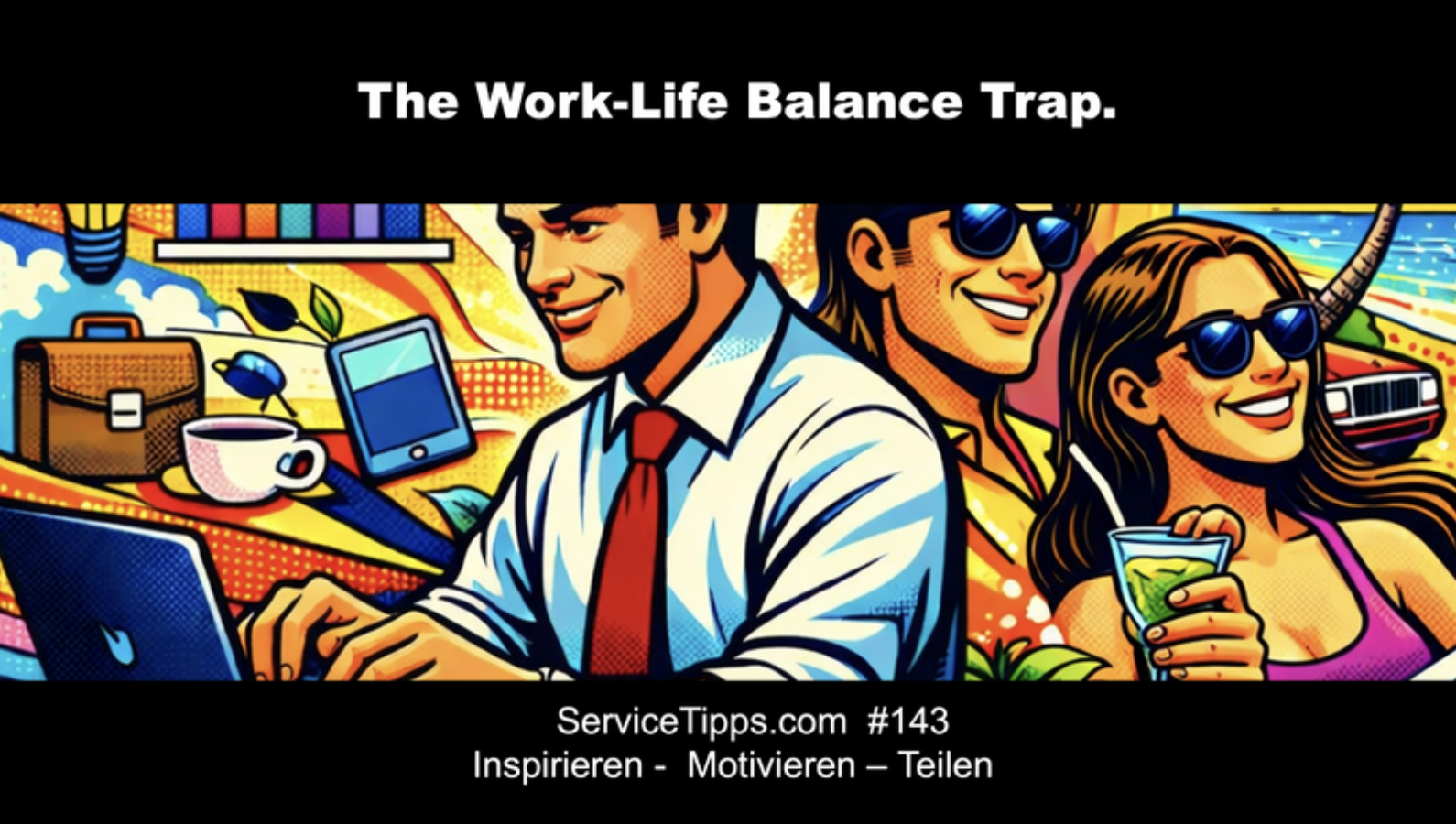
Work-life balance is often seen as a promise of happiness and satisfaction.
The idea is to balance everything evenly, to clearly separate work and life, and to avoid stress at all costs.
At first glance, this sounds reasonable—but in reality it often remains abstract. Real work in many industries is not linear. Demand from customers or guests, as well as orders in trades and services, does not arrive evenly. When employee representatives demand that companies should create balance—or even convert seasonal work into year-round employment—that may be understandable in principle, but in practice it is often a pious wish that cannot be implemented across the board.
The alternative to work-life balance is work-life focus.
Let me offer a few thoughts on this:
Work and leisure are not opposites, but phases of different intensity.
There are times when working 12 hours or more a day can be meaningful, necessary, and fulfilling—because projects, customers, or opportunities demand it.
And there are times when conscious leisure only unfolds real quality and deep enjoyment because something meaningful was created beforehand—something one can be proud of.
Permanent leisure without achievement does not lead to satisfaction, but to emptiness. And focused performance without success, without fair financial compensation, and without recovery leads to burnout.
The key, therefore, is not balance, but the conscious management of work intensity. Focused work, concentration on the task, avoiding constant distraction, and occasionally “immersing” oneself in flow is an alternative counter-model to work-life balance: work-life focus.
Not being labeled a workaholic when you push hard for a few weeks—and not being dismissed as a leisure-seeker when you enjoy extended breaks while others let balance dictate their lives—requires the mindset of work-life focus.
A prerequisite for this model is always that the framework conditions allow it. Imposing a legally enforced balance across all industries, on the other hand, is far removed from reality.
An early end to the workday—as recently discussed by the FAZ—must not be an ideological goal, but the result of productive, clearly structured work. Not less work, but better work. Only then can leisure be enjoyed intensely and without guilt.
Our FOCUS
- Work-life focus as an alternative to work-life balance in workforce planning and in working with employees.
Do not track hours—measure performance.
Do not just have free time—enjoy it and actively shape it. - Work based on demand, not on the clock.
- Leisure as the result of performance.
Our BENEFITS
- More meaning in work. Keyword: logotherapy by Viktor Frankl.
- Higher productivity without permanent stress.
- Balance, recovery, and flow in leisure time.
- Satisfaction through created substance.
From my observations, many balance-oriented people tend to be rather boring, while employees who focus on their work and professionalism are seen as experts—people with interesting stories, driven by curiosity and a spirit of innovation. In short: focus beats balance.
Finally, three benefits for YouTube subscribers or Members of ServiceTipps:
If you don’t want to miss any future ServiceTipps videos on YouTube, subscribe to the channel and share this video with your employees and friends.
As a member of ServiceTipps.com, you get full access to all contributions created since the beginning of 2025, free to use across your entire organization. In addition, subscribers receive an exclusive 30% discount on my AI talks and AI keynotes.
So long—servus, ciao, and allegra. Stay curious and do your thing.
