Warum Vertrauen heute stärker wirkt als Reichweite #B151
Nutze KI bewusst – sie ist ein gigantisches Werkzeug, gewissermaßen vergleichbar mit der Erfindung des Telefons

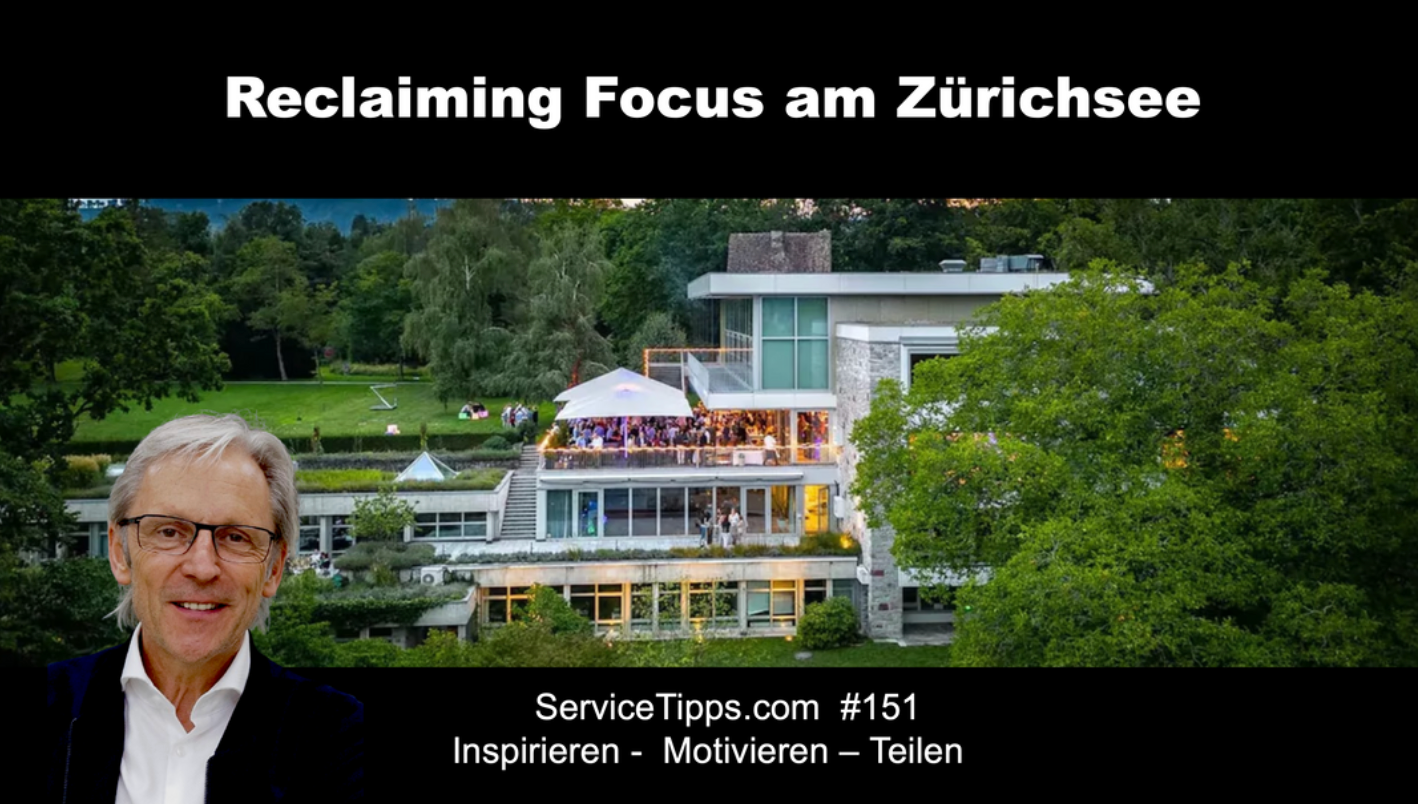
Letzte Woche war ich in Rüschlikon am Zürichsee beim Europäischen Trendtag von GDI, der Gottlieb Duttweiler Institute. Das Thema: Reclaiming Focus – How to Stand Out in a World of Constant Noise. Also: Fokus zurückgewinnen – Wie man in einer Welt des ständigen Lärms heraussticht.
Spoiler: Es ging um mehr. Auch um Politik und Gesellschaft – und um Gefahren in dieser Welt des digitalen Lärm, die Gefahren, die uns nicht erst einholen werden, sondern bereits unter uns wuchern. Besonders die Jugend ist Zielgruppe. Deshalb wundert es mich nicht, dass zum Beispiel gut gebildete Mittzwanziger der Manosphäre das Wort reden. Also: „Männer sagen, wo es langgeht, Frauen an den Herd.“ Mit Verlaub: Ihr seid diese Typen, die man schon im letzten Jahrhundert für fast ausgestorben hielt.
Ganz zu schweigen von den Algorithmen, die Kinder systematisch süchtig machen. Verantwortlich dafür sind viele Tech-Oligarchen, die in ihrer opportunistischen Heuchelei dem „fürchterlichen König von Amerika“ beim Abendessen die Füße küssen.
Aber zurück zum Fokus in dieser lauten, penetranten Welt, in der Algorithmen noch stärker sind als vermeintlich starke Männer mit großer Klappe.
Und vorwärts in eine Welt, in der ich die eigenintelligente Anwendung der Künstlichen Intelligenz als Kompetenz betrachte, die beinahe für uns alle unumgänglich ist.
Deshalb mein Rat: Nutze KI bewusst – sie ist ein gigantisches Werkzeug, gewissermaßen vergleichbar mit der Erfindung des Telefons.
Worüber sich alle Referenten einig waren: Social-Media-Systeme filtern unsere Realität. Sie entscheiden, was wir sehen, worüber wir nachdenken und oft auch, wie wir handeln. Unternehmen, Creator und Medien verstärken diese Dynamik selbst. Künstliche Intelligenz wird missbraucht für mehr Content, mehr Kanäle, mehr Druck. Das Ergebnis ist Informationsflut, sinkende Aufmerksamkeit und steigendes Misstrauen gegenüber Unternehmen, Politik und Medien. Gute Botschaften gehen in diesem seichten Rauschen unter.
KI ermöglicht zudem extreme Skalierung: Ein Inhalt kann in 100 Varianten ausgespielt werden – schneller, günstiger, breiter. Geschwindigkeit wird zum Erfolgsfaktor. Wer mit Neuigkeiten einen Tag zu spät ist, verliert. Doch reine Geschwindigkeit ohne Substanz zerstört Marken und Vertrauen.
Gleichzeitig entsteht ein Gegentrend: Menschen suchen Orientierung, Echtheit und klare Signale. „Not (only) by AI“ wird zunehmend zum Vertrauensanker. Nachhaltige Aufmerksamkeit folgt nicht mehr nur der Quantität, sondern Qualität, Relevanz, dem richtigen Timing und vor allem der Erzählbarkeit. Um diesen Gegentrend zu bedienen, benötigt man allerdings wiederum KI.
Das mag nun alles ein wenig ambivalent klingen, ist es aber nicht. Vielmehr ist diese Dualität von Pro und Kontra KI eine differenzierte Betrachtung und Anwendung derselben.
Unser FOKUS, wenn wir nachhaltig Wirkung erzielen wollen:
- Wir – als Unternehmen und auch privat – müssen lernen, EI - also Eigene Intelligenz - in Kombination mit KI als Werkzeug zu nutzen, ohne unsere Identität zu verlieren. Eigene Gedanken, kohärentes Wording, Kulturtreue und Haltung sind zentrale Stichworte dazu.
- Wir fragen uns: Wie viel Output bringt wirklich Wirkung – und wann wird es Lärm oder Penetranz?
- Wie schnell sind wir heute? Zu schnell oder zu langsam? Wie ist unser Timing im Vergleich zum Markt?
- Sind unsere Stories wahr, relevant und verständlich? Erreichen sie unsere Zielgruppe?Liefern wir, was wir versprechen?
- Haben wir Fakten für den Erfolg unserer Kommunikation – basierend auf klaren KPIs?
Unser NUTZEN:
- Stärkeres Vertrauen durch klare, erkennbare Haltung
- Schnellere Reaktion auf Marktgespräche und Trends
- Bessere Markenwirkung trotz algorithmischer Filter
- Mehr Sichtbarkeit durch relevante, getestete Inhalte
- Erfolg entsteht aus dem Zusammenspiel von EI, KI und Klarheit.
Mein „zu guter Letzt“:
Dieser ServiceTipp gibt eine Zusammenfassung der acht Referentinnen und Referenten wieder – sowie meiner eigenen Gedanken zwischen den Vorträgen am GDI.
Und: KI macht vieles lauter, aber nicht automatisch besser. Entscheidend ist, ob wir den Mut haben, klarer zu werden, statt nur mehr zu senden.


Last week, I had the opportunity to attend the European Trend Day of the GDI (Gottlieb Duttweiler Institute) in Rüschlikon on Lake Zurich. The topic: Reclaiming Focus – How to Stand Out in a World of Constant Noise. In other words: regaining focus – how to stand out in a world of constant noise.
Spoiler: it was about more. It also touched on politics and society – and on risks that are not approaching us, but are already growing among us. Young people in particular are a key target group. That’s why it doesn’t surprise me that even well-educated people in their mid-twenties are advocating ideas from the manosphere. In other words: “men decide where things go, women belong at home.” With all due respect: you are those blind types that people already thought had disappeared in the last century.
Not to mention the algorithms that systematically make children addicted. Many tech oligarchs are responsible for this, acting in opportunistic hypocrisy and, at dinner, kissing the feet of the “terrible king of America.”
But back to focus in this loud, intrusive world, where algorithms are often more powerful than supposedly strong men with big mouths.
And forward into a world in which I see the self-directed, intelligent use of artificial intelligence as a core competence that is almost unavoidable for all of us.
That’s why my advice is: Use AI consciously – it is a powerful tool, in a way comparable to the invention of the telephone.
What all the speakers agreed on: social media systems filter our reality. They decide what we see, what we think about, and often how we act. Companies, creators, and media reinforce this dynamic themselves. Artificial intelligence is being misused for more content, more channels, more pressure. The result is an overload of information, declining attention, and growing distrust toward companies, politics, and media. Good messages get lost in this shallow noise.
At the same time, AI enables extreme scaling: one piece of content can be distributed in 100 variations – faster, cheaper, and broader. Speed becomes a success factor. Whoever is one day late with their message loses. But pure speed without substance destroys brands and trust.
At the same time, a countertrend is emerging: people are seeking orientation, authenticity, and clear signals. “Not (only) by AI” is increasingly becoming a trust anchor. Sustainable attention no longer follows quantity alone, but quality, relevance, the right timing, and above all, storytelling. However, to serve this countertrend, AI is once again required.
This may sound somewhat ambivalent, but it is not. Rather, this duality of pro and contra AI reflects a differentiated perspective and application of it.
Our FOCUS, if we want to create lasting impact:
As companies – and also privately – we must learn to combine EI (our own intelligence) with AI as a tool, without losing our identity. Original thinking, coherent wording, cultural consistency, and a clear stance are key factors.
We need to ask ourselves: how much output actually creates impact – and when does it become noise or annoying overexposure?
How fast are we today? Too fast or too slow? How does our timing compare to the market?
Are our stories true, relevant, and understandable? Do they reach our audience? Do we deliver what we promise?
Do we have measurable proof of communication success – based on clear KPIs?
Our BENEFITS:
Stronger trust through a clear and recognizable stance
Faster response to market conversations and trends
Better brand impact despite algorithmic filters
More visibility through relevant, tested content
Success comes from the combination of EI, AI, and clarity.
My “last but not least”:
This ServiceTip summarizes the insights of the eight speakers – as well as my own thoughts between the sessions at the GDI.
And: AI makes many things louder, but not automatically better. What matters is whether we have the courage to become clearer instead of simply sending more.

.